Chat Test
Testing










Testing
PROVIDER REFERRAL FORM (PDF)
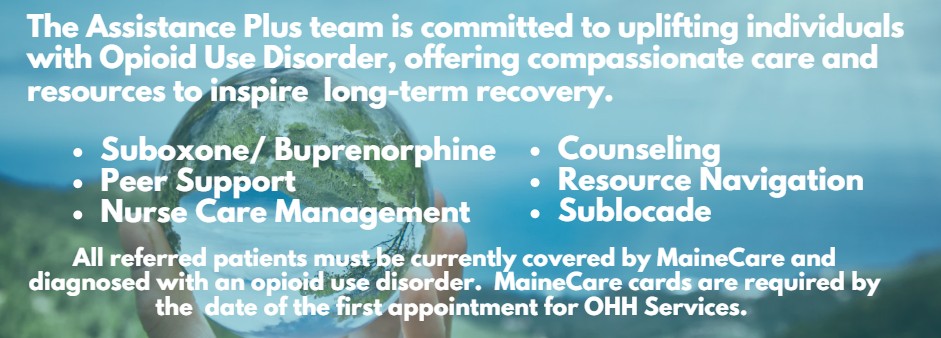
High-level and integrated outpatient Medication Assisted Treatment (MAT) and counseling for people with Opioid Use Disorder seeking substance-use treatment. Person-centered supports that can help clients in their unique pursuit of long-term recovery and resilience at every level. Regular office visits, screenings & assessments. Medication-Assisted Treatment (MAT). Options for individual, group, & peer counseling. Community integration and comprehensive recovery support.
Assistance Plus Substance Use Disorder Treatment offers caring support and education as you work to regain confidence and coping skills in your daily life. It can also be the next step after inpatient hospitalization. The Assistance Plus treatment team are both mental health and substance use treatment professionals with over 75 years of collective experience.
You are at the center of every decision we make. We work collaboratively - with you and with your other care providers. Assistance Plus Substance Use Treatment requires your continued commitment to participate based on regular evaluations and how you and your treatment team are doing.
Approach
The Assistance Plus treatment team is committed to supporting each person experiencing Opioid Use Disorder, based on their specific needs. We are committed to providing high-quality care at all levels of recovery. Our approach leverages each individual’s community resource and social service network as we encourage and guide clients toward achievable goals for long-term recovery.
Services Provided
Regular office visits, screenings & assessments.
High-level and integrated outpatient Medication Assisted Treatment (MAT)
Counseling for people with Opioid Use Disorder seeking substance-use treatment.
Person-centered supports that can help clients in their unique pursuit of long-term recovery and resilience at every level.
Options for individual, group, & peer counseling.
Community integration and comprehensive recovery support.
Next Steps
Referrals can be made by your primary care provider, case manager, and/or counselor. Clients can self-refer.
All referred patients must be currently covered by MaineCare and diagnosed with an opioid use disorder.
MaineCare cards are required by the date of the first appointment.
Begin a referral, REQUEST SERVICES HERE, or contact our team using the resources here.
Too many stressors at any age are difficult, but for people with early childhood trauma, it is different. The Assistance Plus Medication Management Program is here to help people experiencing depression, anxiety, PTSD, or other mental health diagnoses create a medication plan that will help them take steps toward living healthy, happy lives.
Medication Management plays a crucial role in the treatment of mental health conditions. It involves the evaluation, prescription, and monitoring of medications to ensure their effectiveness and safety in managing symptoms. We provide comprehensive evaluation and personalized treatment plans to individuals with mental health conditions.
Medication management is an important aspect of mental health treatment. Assistance Plus Medication Management offers comprehensive evaluation and personalized treatment plans. We have expertise in a wide range of medications.
Our medication management process includes initial assessment and diagnosis, customized medication plans, and ongoing monitoring and adjustments. Specialized services are offered for a number of conditions.
Choosing Assistance Plus services can lead to improved medication compliance, reduced risk of side effects, and more favorable treatment outcomes.
Medication Management can be helpful for individuals with mental health conditions to effectively manage their symptoms and improve their overall well-being. It involves developing a comprehensive treatment plan that includes the appropriate use of medications, prescribed by a qualified clinician, along with other therapeutic interventions. By regularly monitoring the effectiveness and potential side effects of the medications, medication management ensures optimal treatment outcomes and helps individuals regain control of their mental health.
This process is overseen by the U.S. Food and Drug Administration (FDA), which provides the latest information, warnings, and approved medications through Medication Guides. It is important to stay informed about drug administration and any updates regarding mental health medications.
The Assistance Plus medication management process is designed to provide individuals with comprehensive and personalized care. The process begins with an initial assessment and diagnosis, where healthcare providers evaluate the individual's mental health condition, symptoms, and treatment history. This assessment forms the basis for developing a customized medication plan that considers the individual's specific needs and goals. The medication plan includes information about potential side effects and interactions, and a medication list that outlines the prescribed medications and their dosages. Ongoing monitoring and adjustments are an essential part of the process to ensure the medication plan remains effective and minimizes any potential side effects.
At Assistance Plus, we take a comprehensive approach to medication management. Our providers conduct thorough evaluations to understand the individual's mental health condition(s), symptoms, and treatment history.
This evaluation helps develop a personalized treatment plan that may include medications if appropriate. The treatment plan is tailored to the individual's needs, preferences, and goals, ensuring they receive the most effective medication management.
By taking the time to understand each individual's unique circumstances, the Assistance Plus Medication Management Services team can provide personalized care that maximizes treatment outcomes and improves overall well-being.
Our qualified Mental Health Providers work closely with patients and their team members, including therapists and/or family members, to ensure that each patient is being provided for as a collaborative effort.
When it comes to mental health and medication management, there are various medications to choose from. Making sure you have a provider with mental health and medication knowledge will ensure you receive the best care possible.
Medication management is part of providing essential care when managing any health issues and their effects on someone. All medications do not affect everyone in the same way, this is why it is important to monitor for side effects and interactions with other medications to ensure individuals are receiving proper care.
The key difference between general medication management and mental health medication management is that typically individuals suffering from mental health issues are monitored by both a prescriber of medication, either a primary care physician or a psychiatrist, and a therapist simultaneously. If a person chooses to work with a therapist, the prescriber and therapist may work together to monitor for any negative effects of medication regarding any symptoms a person has.
Initial Provider Meeting: When you first see a psychiatric medication provider such as a primary care physician or a psychiatrist, they will perform an initial assessment that asks about details related to your personal and familial medical history along with current symptoms and issues you are having. You need to provide an accurate account of your personal medical history of any illnesses, disorders, and medication that you are currently taking to properly reduce any harmful side effects. Taking multiple medications may also result in added side effects.
Based on the results of this assessment, the provider will make a diagnosis and provide options in something called a treatment plan that is tailored to your needs. If you, as the patient, decide to move forward with medication, a medication will be selected and prescribed for a trial period. The provider will go through side effects and dosages to give you information as for what to expect while taking the medication. It is also important to realize that not everyone with a psychiatric condition may need medication.
Once a medication has been prescribed, after the trial period you and your provider will discuss whether or not this medication is effectively treating your symptoms. If the medication is working with no side effects and is being taken as prescribed, then you can continue to take it. If the medication is not working, then there may be a few more trial periods with different medications to determine which is the best fit for your needs. In addition to monitoring symptoms using medication, you may be suggested to see a counselor or partake in behavioral or cognitive therapies to aid the improvement of your symptoms.
A significant benefit of medication management of mental health is the direct link between successfully managing symptoms of mental health disorders and a direct reduction in the cost of overall health care. Essentially, providing quality, cost-effective mental health care including medication management can reduce overall healthcare costs by mitigating risks of homelessness, incarceration, inpatient hospital stays, and other intensive mental health care.
Limiting medication errors and dangerous side effects Another benefit of medication management is proactive drug utilization review (DUR). This is a descriptor for ongoing evaluations of prescribing and using medications. Using this can allow for omitting unnecessary medications, and drug interactions, and can help bridge care gaps which can also aid in cost-effectiveness. Care gaps may result in poor communication and medical errors; continuous monitoring using DUR can help ensure proper medication use, dosage, and care.
Creating and maintaining a provider-patient relationship is essential to the importance of medication management in mental health and can also provide peace of mind not only for you but for your family as well. Continuous care and monitoring through medication management for mental health ensures proper care for you and relieves pressure from families.
Creating a plan that is tailored to your needs and your medical necessities is imperative for effective care. Managing medications through consistent evaluations and review of side effects and symptom management can help individuals improve functioning and guarantee a positive outcome.
Medication management for mental health is important for a variety of reasons including built-in monitoring for changes, possible decreased health risks, and bridging care gaps resulting in cost-effective and positive outcomes for patients.

The benefits and importance of medication management in mental health are abundant. One important reason is to monitor for changes including improvements and setbacks when dealing with mental health issues and concerns. These changes may warrant a change in dosage or medication entirely depending on the circumstance.
Medication management for mental health is important because it can help decrease risks including severe and dangerous medication interactions and improve recovery time and quality of care. Managing multiple medications can be difficult, which is why it is important to continue reviewing and monitoring for side effects and medical errors. Using multiple medications also increases the risk of addiction; monitoring medications can alleviate and watch for signs of addiction and abuse of medications.
Mental health medication management is essential to providing care that can eliminate unnecessary medications that may cause complications or increased recovery times. Ensuring the best outcome for patients and creating a functional relationship between provider and patient is another reason why medication management is important. This relationship adds cushion to bridge care gaps between providers and helps patients understand the reasonings behind using specific medications and therapies.
Children’s Case Managers (CCMs)
CCMs serve children with behavioral health, chronic medical conditions and/or developmental disabilities. The CCM assists families in locating and accessing resources, advocating in school systems and other systems-of-care. Requirements: Bachelor's Degree in human services or related field; OR Bachelor's Degree in unrelated field and at least one (1) year relevant human services experience; OR Master's Degree in social work, education, psychology, counseling, nursing, or related field.
Direct Support Professionals (DSPs)
DSPs provide in-home, center-based, and/or community membership and integration supports for adults with intellectual disabilities and/or autism. Requirements: High school diploma or equivalent preferred. Training: CPR/First Aid, DSP certification within 4 months of hire.
Daily Living Support Specialists (DLSS)
DLSS provide in-home & community-based services to those needing assistance with daily living skills such as healthy meal planning, budgeting, self care, coping skills through modeling, cueing and coaching. DLSS assist & support clients around their daily goals to help them remain independent and safe in their homes and communities. Requirements: High school diploma or equivalent. Training: MHRT/1P or MHRT/1 certification.
Certified Intentional Peer Support Specialists (CIPSS)
The CIPSS works with our behavioral home health team to ensure that well-coordinated and integrated care is delivered to the youth and families served. CIPSS provides leadership and technical assistance in developing and implementing BHHO peer support services. Requirements: High school diploma or equivalent, Peer 101 certification upon hire. CIPSS Provisional certification within 6 months from hire. CIPSS Certification within 1 year of hire. Self-identified mental health consumer who has personally experienced a severe and persistent mental illness. Must be able to work flexible hours, which may include weekends, evenings, and holidays.
Adult Case Managers (ACMs)
ACMs serve adults with behavioral health diagnoses and chronic medical conditions. The ACM assists clients in locating and accessing resources. Requirements: High school diploma or equivalent. Training: MHRT/Cp or MHRT/C.
Personal Support Specialists (PSS)
The PSS provides assistance in activities of daily living (ADLs) to individuals so that they can remain in their own homes. Requirements: High school diploma or equivalent preferred. Training: PSS certification within 6 months of hire.
Family Support Specialists (FSS)
The FSS works with the BH home team to ensure that well-coordinated and integrated care is delivered to youth and families served in the form of guidance and technical assistance leveraging BHHO family support services. Each FSS must be willing to share experiences with families, co-workers, & community providers. Requirements: High school diploma or equivalent. Three or more years of lived experience in parenting or in a parenting role. Ability to articulate their lived experiences. Three or more years of lived experience navigating child-serving systems of care.
Search for the position you are qualified for, and begin applying today!
Assistance Plus is a social service and non-medical agency with offices in Benton, Waterville and Wilton, Maine. We provide long term home care, developmental disabilities, and behavioral health services.
|
Our Mission: |
By supporting and caring for people at all points in life, together we can make a difference. |
|
Our Vision: |
Maine ~ where individuals in need receive services that support choices for a quality life. |
|
Our Values: |
Commitment ~ Integrity ~ Compassion |